


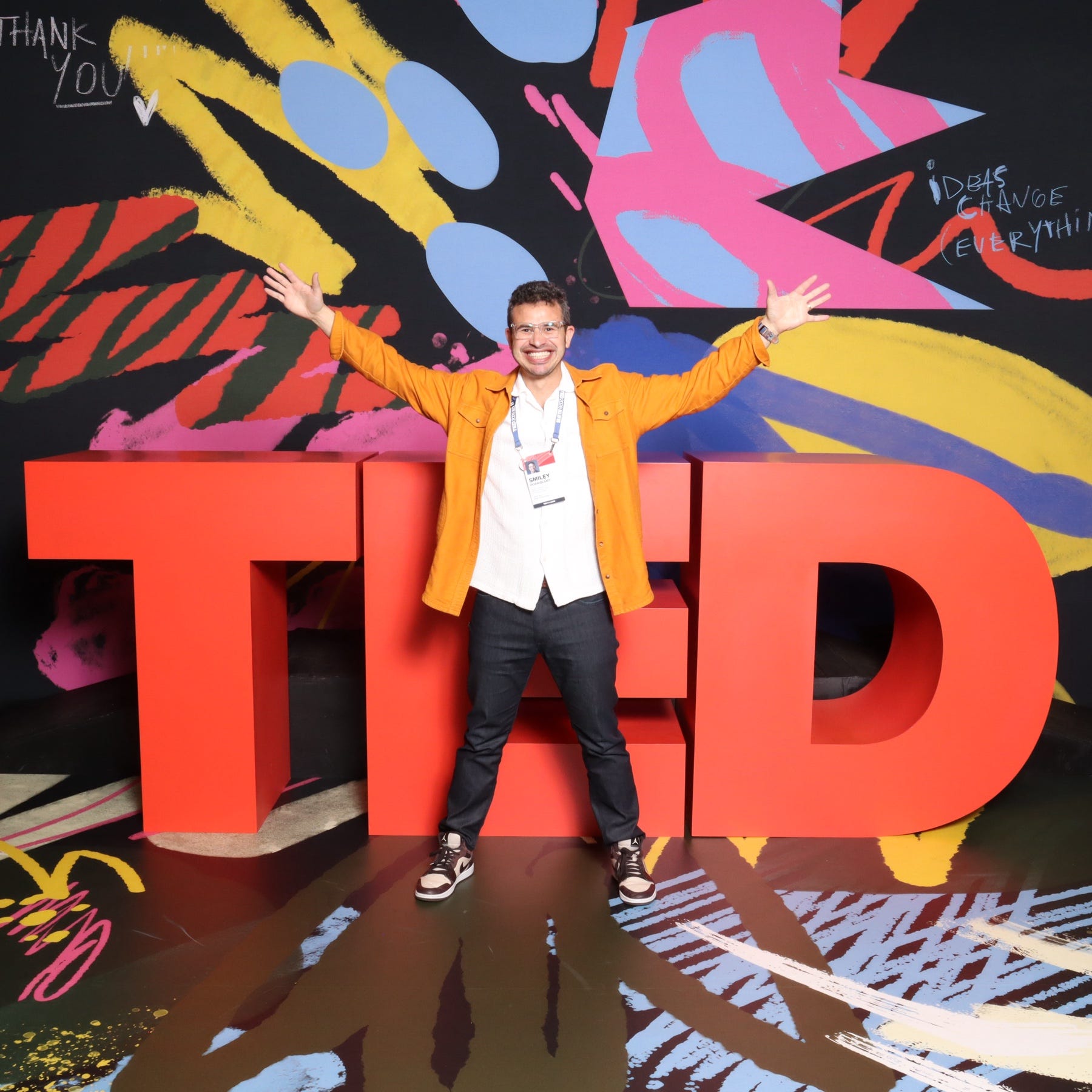
Last month I attended my first big TED event in Vancouver. As someone who gets paid to speak professionally and has given three TEDx talks (none on the TED main stage—not yet!), the reason I went to TED was simple: to be inspired, to learn, to be in the company of the most successful thought leaders in the world.
My top three takeaways were:
There are more people who care about fixing our broken world than those who seem hell bent on destroying it. While hope and optimism are hard to come by these days, I did feel an overwhelming sense of possibility for humanity when I left. I came feeling brain rot and dread, I left feeling brain expansion and hope, and a renewed sense that my work spreading the power of human connection matters now more than ever.
There is a non-zero chance that we are totally fucked. There were several talks by people with immense technological and political influence that made me very uneasy and nervous. Many of the people building the most powerful AI and AGI, military weapons, surveillance tools, genetic testing; do not seem like people I’d trust to watch my dog for an hour, let alone trust with holding the keys to whether or not our civilization survives. The dichotomy between takeaway 1 and takeaway 2 is at the heart of the TED experience. 95% of TED attendees are leaders, entrepreneurs, and changemakers who really do give a shit. Yet the 5% who give a shit less have a grossly unfair share of the money, power, and influence running our world right now, which puts us in a perilous position. This dichotomy was best summed up by comedian George Civeris: “TED is only place where everyone here is trying to change the world, sitting next to the very people who ruined it.” Pretty much.
I don’t want to be famous. I wasn’t expecting this takeaway, but I walked away from TED thinking, “If whatever I’ve done up to this point is all I get to do when it comes to my thought leadership, then I’m content, I’m satisfied, I do not need anything more.” TED is a weird place cause you see very famous people you know (that you actually don’t know at all… parasocial relationships in full effect!) walking through the hallway, waiting in line at a food truck, sitting next to you in the theatre. More or less, all of these A-list thought leader celebrities were very friendly and approachable. However, when I talked to them or people on their teams, in my subjective experience, they didn’t seem all that happy or energized. Now, it’s got to be annoying to be a famous thought leader at a place like TED, where everyone is trying to say hi or take a selfie with you or tell you about their new book… it must be a huge pain in the ass to feel like you can’t let your guard down at a place that’s all about spontaneous connection. However, I got the overwhelming sensation that becoming a more famous or “influential” thought leader (ie, having a book that spends years on the New York Times bestseller list, getting paid hundreds of thousands of dollars for a corporate talk, getting thousands of downloads on your podcast, and millions of views on your social media posts) might not actually turn out to be all that beneficial in terms of quality of life or joy. My takeaway was: the aim is not to be _________ (fill in the blank with the thought leader or creative you most admire). The aim is simply to enjoy what you do, be very good at what you do, get paid well for what you do, be respected and known by your peers for what you do, have high-levels of control, agency, and freedom in terms of how you spend your time and who you spend it with, and most importantly: make an impact that matters.
Of these takeaways, while the first two register as more significant, the third is the one that has stuck with me the most.
I walked away thinking: wow, I kind of have it pretty sweet right now. Maybe I have already made it. Maybe this is as good as it gets.
I love what I do. I’m good at what I do. I make a good living for what I do. I’m known by my peers and respected in my field for what I do. And I have an incredible amount of time to spend with my wife, friends, and community. I work hard, but not like that hard. I take time off whenever I want to. Nobody at the airport knows who I am. Twenty people at TED know who I am, which seems like a good number. I don’t feel pressure to scale my business because of a massive following or financial opportunity.
What if (especially for us thought leaders, speakers, authors, and creatives…) instead of trying to be famous or go viral or scale our platform; we settled for (scratch that, shot for) Almost Famous, or Almost Almost Famous?
I love that line from Philip Seymour Hoffman (GOAT!), playing rock critic Lester Bangs in Cameron Crowe’s Almost Famous: “The only true currency in this bankrupt world is what you share with someone else when you’re uncool.”
Maybe the only true currency in this insatiable world is playing your own game. It’s knowing what making it means to you.
Lessons from TED2026
Mark Rober: I can’t teach you if I don’t have your attention
Gina Raimondo: build your career around what companies need right now, not what colleges say you need
Carissa Veliz: predictions are about power, uncertainty is good news, it means the future is ours to write. Be very weary when influential people say their prediction (let’s say, about AI leading to mass layoffs and a permanent underclass) is “inevitable,” especially if they have a financial/political/power stake in the outcome they say is inevitable. When we say something is inevitable, we give up our individual and collective agency.
Jonathan Haidt: we’re so focused on the digital future, we don’t protect kids in the digital present
Jacob Collier: music is love
Emily Kasriel: listening does mean not agreement, listening means deep listening
Harville Hendrix: you cannot love without knowing, listening is the first act love
Esther Perel: we’re experiencing social atrophy; “ambiguous loss” is two people in a room together on their phones; how you enter a place is how you enter a relationship; we’re afraid to settle for good for fear of missing out the perfect; 74% of restaurant food is eaten outside a restaurant; the point of relationships is sitting in the muck. We’re so interested in AI, but we should be more interested in aliveness.
Randall Lane: billionaires used to be popular caused they used to donate more of their net worth to charity, now billionaires are as unpopular as members of Congress
Gabriella Di Laccio: 90% of the music we hear is written by men
Nicholas Epley: the research proves we’re very bad at predicting how talking to strangers will go, we think connecting is going to suck, but it’s received more positively than we think. Point is: approach a stranger. When in doubt, reach out.
Ann Patchett: reading shines the light on isolation, bookstores are hubs of human connection.
Eli Finkel: what matters most for a relationship to survive is not a list of attributes we think matter, it is your ability to build a private world with your partner (your inside jokes, riffs, your shared language and references). It’s not about date night, it’s about savoring your private world. Relationships die when you fail to protect and celebrate your private world.
Jennifer Cearns: what if AI is revealing humanity not diminishing it? What if it is revealing our hopes/desires/fears/values? 20 AI platforms are for people to talk to people who have passed away, 100 million people are talking to AI companions. What if AI isn’t replacing human connection but creating more opportunities for human meaning making? What can AI teach us about ourselves? Maybe AI doesn’t make us less human, but makes our humanity impossible to ignore.
Jill Bolte Taylor: our brains are as expansive as the universe itself, whole brain living is about all four characters in your brain being fully alive.
Neal Kumar Katyal: Neal argued against the President’s $4 trillion tariffs at the Supreme Court. In his words: “In 237 years, the Court had never struck down a sitting President’s signature initiative. Legal scholars said it was impossible. Some of my own colleagues said it was impossible.” They won a 6-3 decision. How? A mindset coach, an improv coach, an AI researcher, and most importantly: connecting deeply with the justices. The lesson: connection is the last irreplaceable human skill.
Amy Cuddy: only 25% of people step in to stop bullying.
Bill Gurley: career success is about continuous learning, restaurateur Danny Meyer spends a year studying before opening each new restaurant, follow your fascination, be a fascinated artisan.
Van Jones: abundance without participation and inclusion is scarcity, the risk of mass unemployment is the risk of mass humiliation. Tech leaders need less greed and speed, more caring and sharing; grassroots leaders need more space and grace, less shame and blame.
Adam Rosendahl: it is possible to build trust in six minutes; you just need music, art, and to ask the right questions
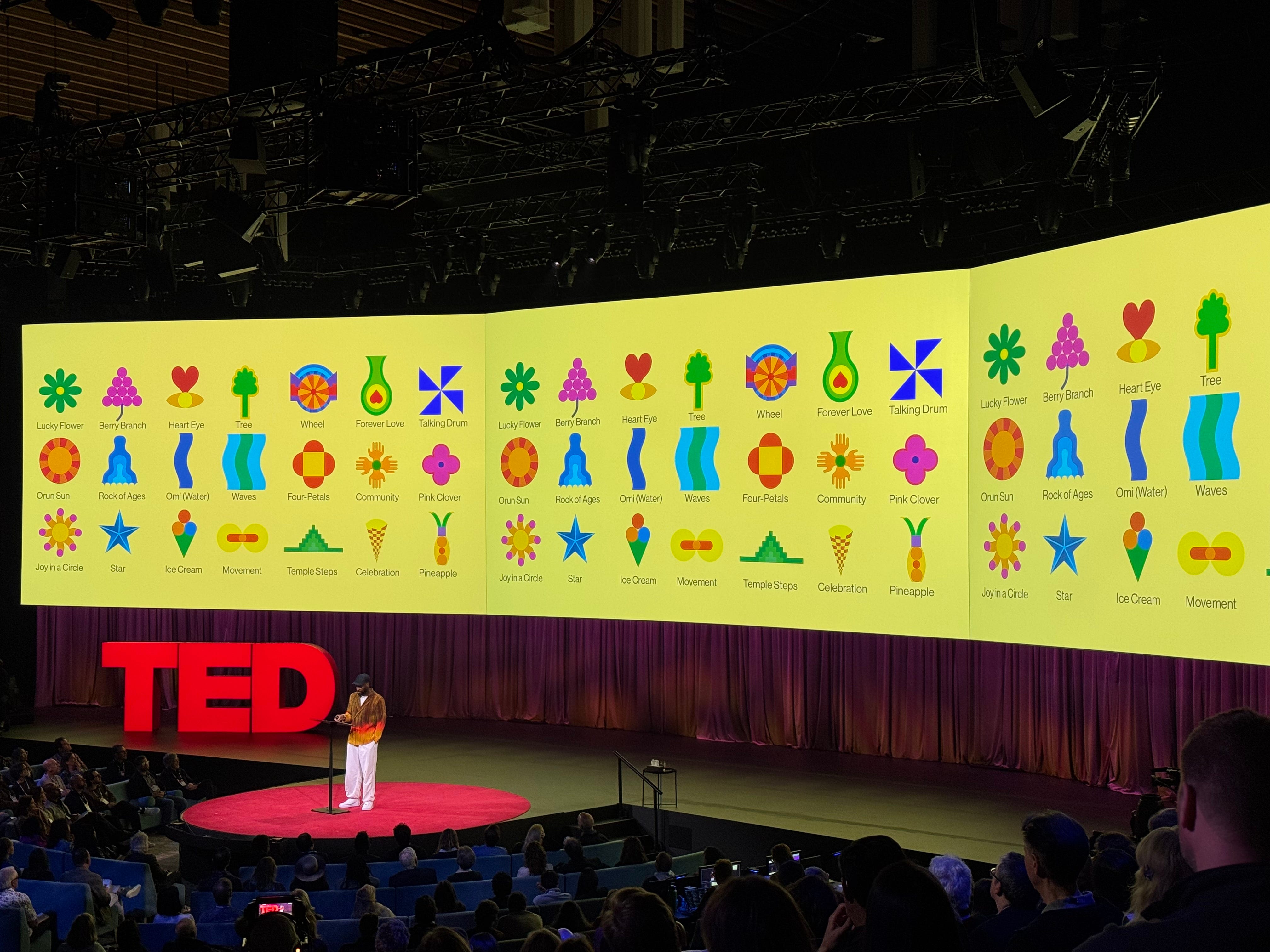
Yinka Ilori: be an architect of joy
I’m grateful I had the opportunity to spend five days learning and connecting with some pretty remarkable humans. The event design, content curation, and attendee experience at TED is best-in-class. I’ve been to more conferences than most, and TED stands apart, above all for the quality of the people. I would recommend it for creatives, entrepreneurs, changemakers, nonprofit leaders, authors, speakers, thought leaders, and really anyone operating at a high-level in their field who cares deeply about all of us on spaceship Earth.
This is huge: "I love what I do. I’m good at what I do. I make a good living for what I do. I’m known by my peers and respected in my field for what I do. And I have an incredible amount of time to spend with my wife, friends, and community. I work hard, but not like that hard. I take time off whenever I want to. Nobody at the airport knows who I am. Twenty people at TED know who I am, which seems like a good number. I don’t feel pressure to scale my business because of a massive following or financial opportunity."
Thanks for writing this up!
Thanks for this curated summary!